Graduate Student Projects in in CEDER group UC Berkeley/LBNL (download flyer here)
We value strong fundamentals in materials science, chemistry, physics, and related fields, initiative in research, and careful quantitative analysis. Students should be willing to learn new methods and work closely with experimental and computational researchers.
1. Build the lab of the future: Autonomous Laboratories for Synthesis and Testing of Novel Materials (A-lab)

Our group has developed A-lab, a facility which can fully autonomously execute solid-state synthesis experiments and iterate in closed-loop fashion towards scientific goals (e.g. determine a synthesis procedure for a target material). The lab uses robots to perform all sample handling including powder precursor mixing, furnace loading and firing, and XRD and SEM characterization. Experiments are designed and analyzed with extensive on-line integration of AI, Natural Language Processing, and ab-initio data (Materials Project). The new GSR will become part of a team to further expand and operate A-lab towards specific scientific design goals, integrate new AI-driven characterization, and integration with new automated capability for battery testing.
Type of work: Mostly experimental with some AI and ML aspects. Work can focus on robotics, novel synthesis, characterization, or new materials discovery, depending on student’s interest.
Mode: Team (internal to Ceder group). Some interaction with other groups at UCB/LBNL
2. Make impact on energy storage: DRX as earth-abundant, inexpensive cathode materials for Li-ion batteries.
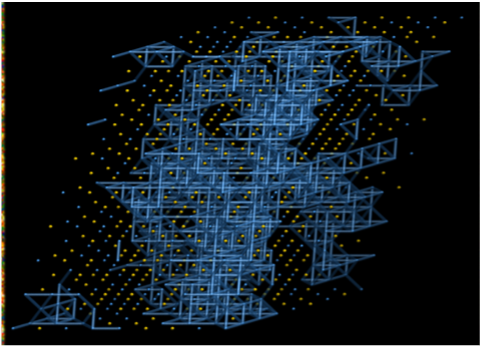
This project focuses on the development of Mn-based cathode materials for Li-ion batteries. Mn-based materials are safe, inexpensive and do not suffer from resource issues plaguing nickel and cobalt based cathodes. Disordered Rocksalt (DRX) materials are currently the most promising direction for Li-ion based energy storage that combines high energy with high safety and low cost. You will work as part of a team on the design, synthesis, and evaluation of novel Mn-based materials. In δ-DRX materials, we study how synthesis and cycling control local structure and how this affects electrochemical performance, using controlled synthesis and advanced characterization. You will get insight into the details of structure and chemistry that influence performance as well as some of the more applied aspects that matter for scale-up and technology implementation.
Type of work: Mostly experimental work focusing on synthesis, high-level characterization (XRD, SEM, STEM, etc.) and electrochemical testing. Close interaction with modeling team. Possibility also for a theory/modeling student if seriously interested.
Mode: Team (internal Ceder group team; and become part of a larger DRX consortium with other National Labs participating).
3. Solid-State Batteries.
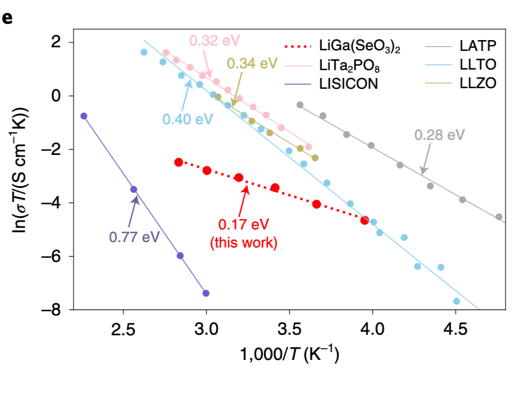
Interested in taking novel materials design all the way through synthesis, testing, and application testing? The Ceder group has currently a significant research activity in the design and development of novel solid-state electrolyte materials. As part of this project we are designing crystalline and amorphous halide and oxy-halide conductors that can combine high Li-ion conductivity with good chemical and electrochemical stability. Because solid-state battery materials production is in its initial stages and no clear materials set is agreed on, this project can have considerable influence on the future of solid-state energy storage.
Type of work: Mostly experimental work focusing on the synthesis, characterization, testing, and integration of novel materials in solid-state batteries. Close interaction with modeling team. The project also connects with A-lab for autonomous synthesis of air-sensitive materials.
Mode: Team (internal Ceder group team).
4. Modeling AI/ML

The Ceder group has significant efforts in the development of novel modeling techniques and their application to relevant materials problems. We have developed, CHGNet, a commonly used universal Machine-Learning Potential, and have integrated AI/ML with both new theory and experimental work. Students will develop and apply AI/ML methods for materials modeling, materials design, and experimental data analysis. This project can be broadly tailored to a student’s interest, and will interact with several other projects.
Type of work: Mostly theory and computation. Broad interactions expected across the group. This work is relatively open-ended.
Mode: Individual or small team interaction. Application of model with broad group interaction.
5. Novel, high-energy density cathode materials for Na-ion batteries
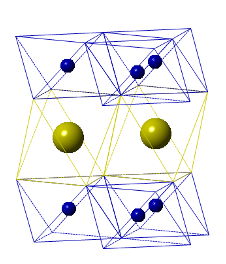
Resource issues in Li-ion may force a transition towards Na-ion batteries. Current Na-ion cathode materials have challenges, such as relatively low energy content, sloping voltages, and lack of stability at high states of charge. Because Na-ion has only become of practical interest, relatively recently, there is considerable opportunity for new discovery. This work will involve both computational and experimental work. AI-driven and high-throughput computing will be used to screen for novel cathode materials, and A-lab and its extensions will be used to rapidly synthesize these materials.
Type of work: Modeling and experimental work (can be performed by separate people). You will learn how we design novel materials, define screening procedures, and implement them in experiments. This project will provide you with insight into practical considerations for novel battery materials.
Mode: Team (internal Ceder group team; and become part of a larger consortium with other National Labs participating).